Vehicle will not charge at home
Collect the charger status, vehicle display message and cable details first.
No matching services. Try another keyword.
Separate a vehicle charging fault from a charger or supply issue.
Intermittent charging, reduced charging power and a vehicle that refuses to charge can arise from the charge-point supply, cable, port, auxiliary systems or vehicle control electronics. Accurate triage avoids replacing the wrong component.
Assessment scope depends on the vehicle, available equipment and safe working procedures. No high-voltage repair or battery dismantling is promised by this enquiry page.
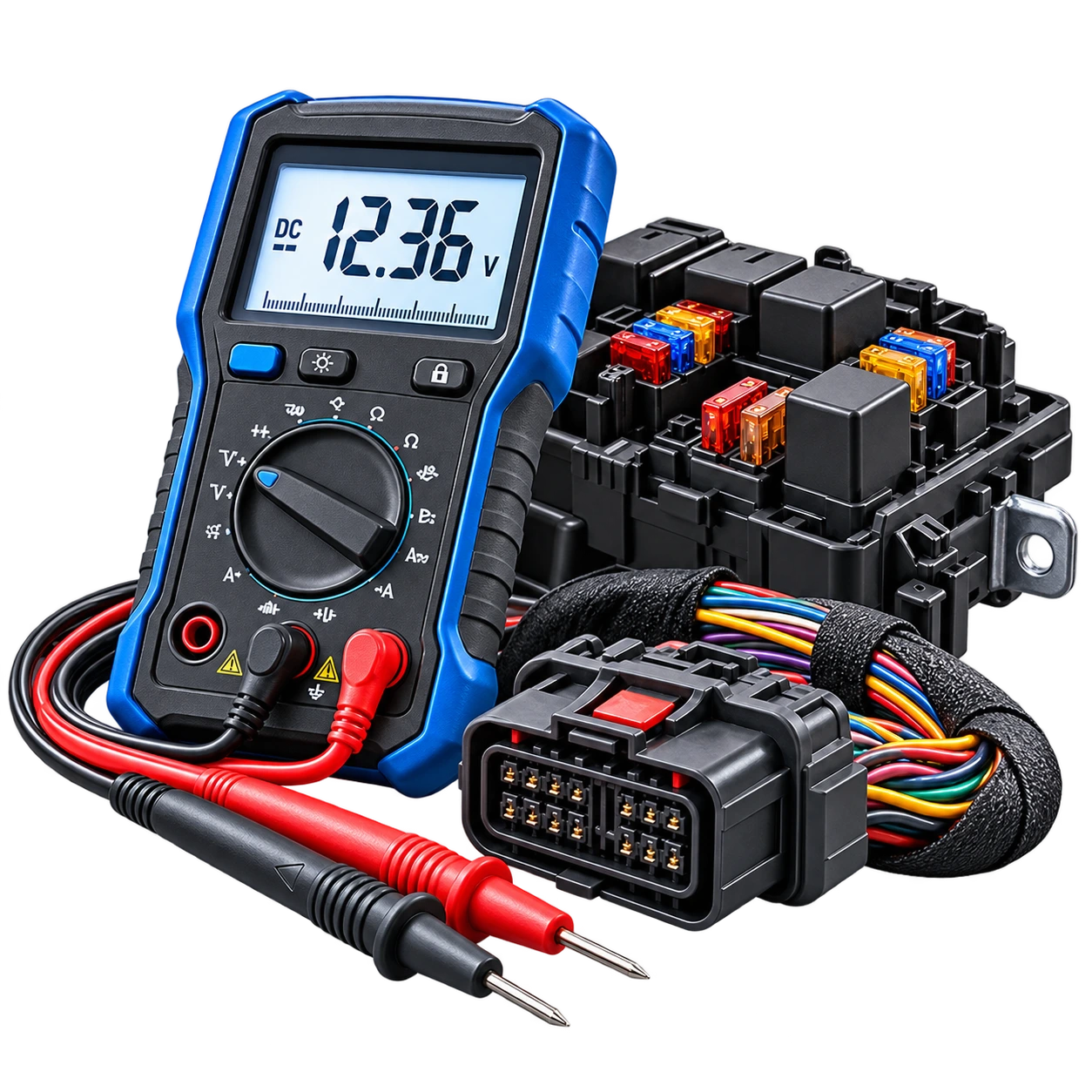
An initial symptom is only a starting point. We confirm the vehicle's diagnostic coverage before making a repair recommendation.
Collect the charger status, vehicle display message and cable details first.
Different charging paths may point to different vehicle or charging-equipment issues.
Check recorded errors, session conditions and accessible charging controller information.
Confirm relevant power supplies, coding, control-module communication and repair history.
We take a measured, vehicle-specific approach rather than assuming an expensive battery or controller must be replaced.
Identify whether the fault occurs on AC, DC, one charger or every charger.
Assess charging-control faults and accessible data where supported.
Avoid live high-voltage testing unless all relevant authorisations, isolation procedures and competencies are in place.
Advise whether more vehicle testing, qualified charge-point inspection or manufacturer work is appropriate.
Use the most relevant page for your symptom, or send us the details if you are unsure.
Possible causes include the charging station, cable, socket, auxiliary battery, communication faults or on-board charging electronics. A diagnostic plan should distinguish these before parts are replaced.
In many EVs the OBC converts AC electricity into suitable DC electricity for battery charging. Vehicle architecture varies, and DC rapid charging typically follows a different path.
We first check the specific vehicle and reported fault. Parts replacement or high-voltage electrical work is only considered if the required procedures, equipment and competencies are available.
Not necessarily. Charging faults often involve systems other than the traction battery. The symptoms, scan data and charging conditions help narrow the fault.
Safety note: electric and hybrid vehicle electrical systems can present serious hazards. Work involving high-voltage components must follow manufacturer guidance and be undertaken only by competent people using suitable procedures and equipment.
We will check whether the vehicle and requested assessment are suitable before confirming an appointment, work scope and price.