CAN bus & communication
U-codes, modules offline, intermittent communication and network faults.
Evidence-led electrical fault finding for vehicles with intermittent no-start problems, battery drain, warning lights, network faults or modules that stop communicating.
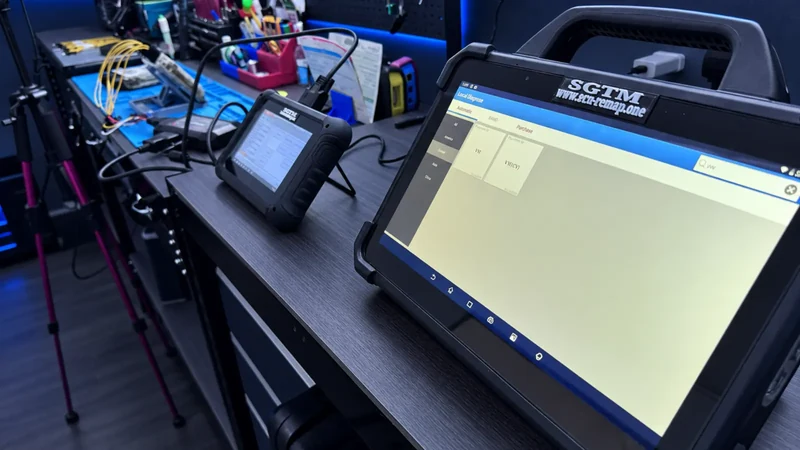
Modern vehicles share power, grounds and data across dozens of control units. One weak supply, damaged wire or module pulling down the network can create several unrelated-looking fault codes.
For auto electrical fault finding in Stourbridge, Birmingham and the West Midlands, we combine full-system diagnostics with targeted checks such as battery-drain investigation, voltage-drop testing, CAN bus communication assessment and no-start electrical diagnosis where appropriate. The repair direction is based on measurements rather than guesswork.
Where testing confirms a component fault, see our alternator and starter motor replacement service at the Stourbridge workshop.
✓Vehicle and module identification checked
✓Diagnostic fault information reviewed
✓Compatibility confirmed where possible
✓Programming route selected for the exact job
Electrical diagnosis should move from the symptom to the affected circuit, power supply, network or control module before parts are replaced.
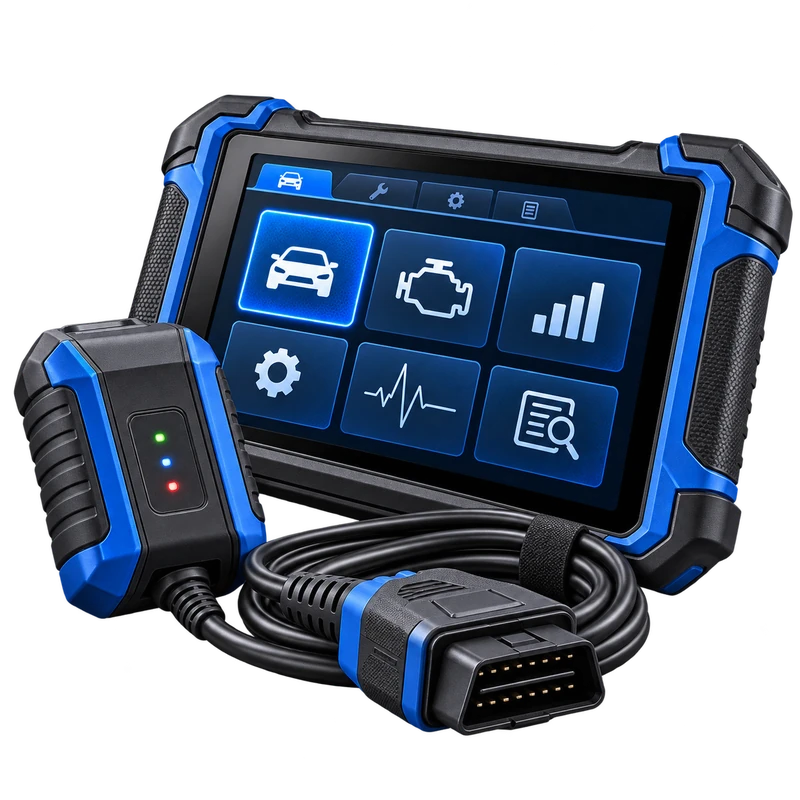
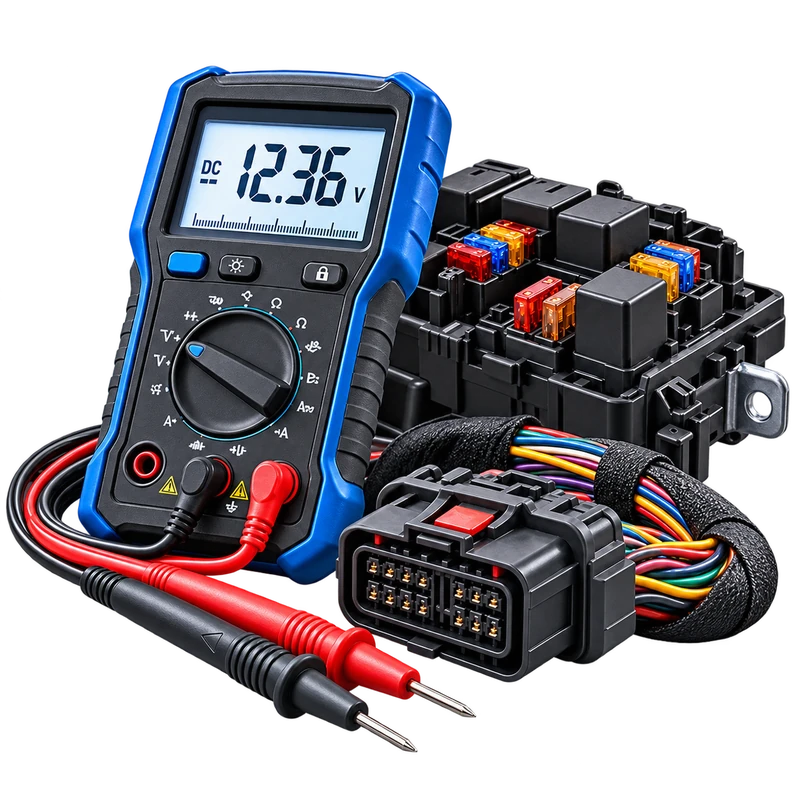
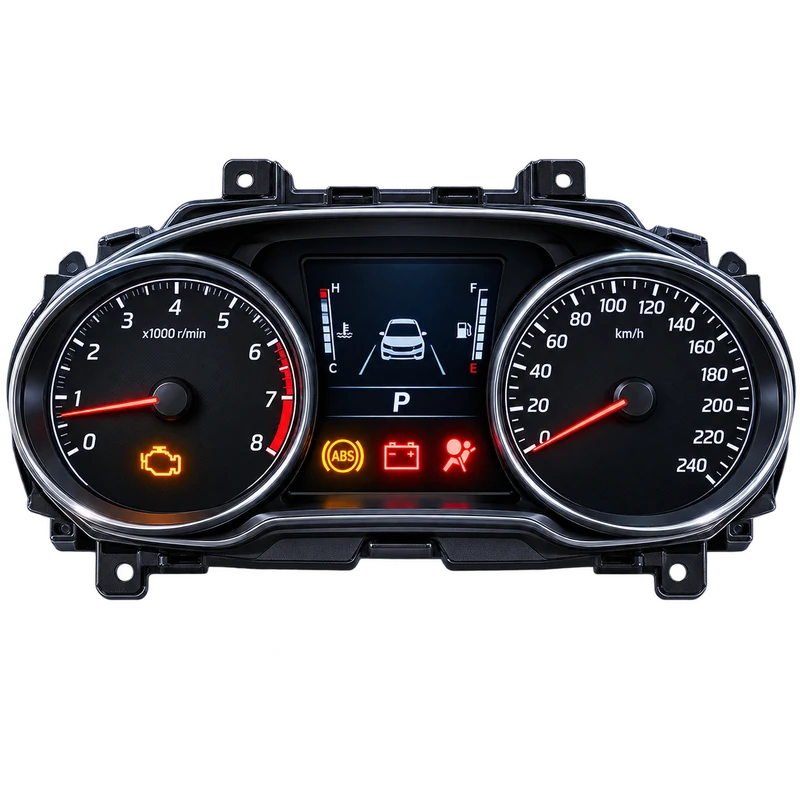
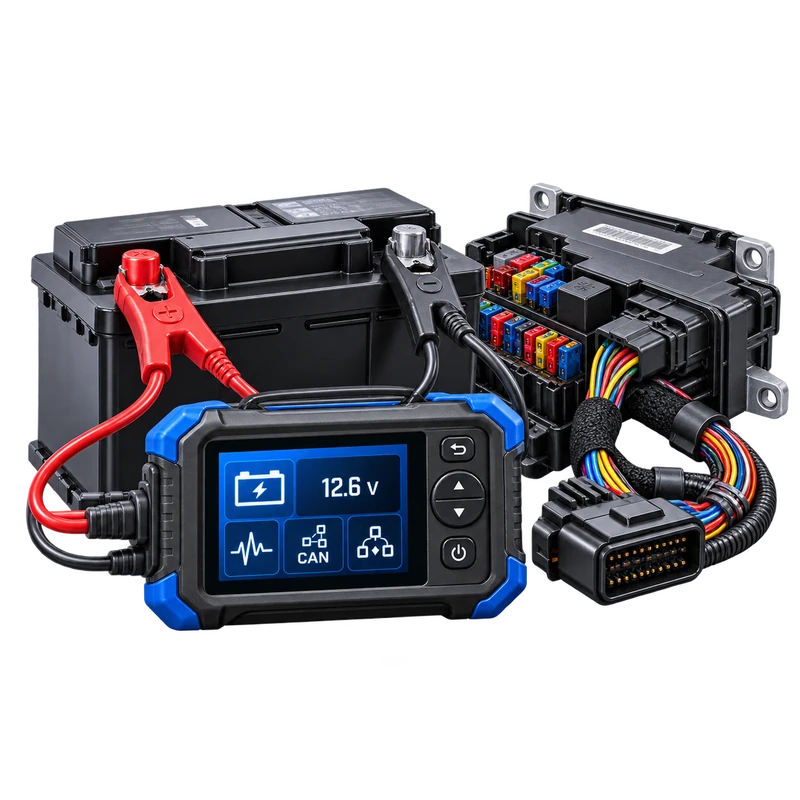
The exact test plan depends on the vehicle and the symptom, but these are common starting points.
U-codes, modules offline, intermittent communication and network faults.
Parasitic current draw, modules staying awake and repeated flat-battery complaints.
Power, grounds, start authorisation, immobiliser communication and ECU supply checks.
Wipers, lighting, windows, locks and other BCM/BSI-controlled functions.
These complaints often need more than a basic code scan.
Vehicle starts sometimes but loses ECU or immobiliser communication.
Several systems illuminate at once or return after clearing.
Battery discharges even after a replacement battery is fitted.
One or more controllers cannot be reached by diagnostics.
Checks for unstable supply, voltage drop and poor ground paths.
CAN/LIN communication assessed when several modules report related faults.
Corrosion, loose terminals and damaged plugs considered before programming.
Coding or software work is carried out only where the diagnosis supports it.
Programming or coding should only follow a confirmed diagnosis. Power, ground, network and connector faults can make a healthy module appear defective.
Review fault memory, battery state and the customer's symptom.
Check the relevant power, ground, network and wiring paths.
Confirm whether the fault points to wiring, configuration or hardware.
Provide the appropriate repair, coding or programming route.