Battery and connections
Assess battery condition and the relevant power, earth and terminal connections. A weak battery or poor connection can affect both starting and charging.
Starting or charging trouble? SG-Tronic Motorsport offers alternator and starter motor replacement after the relevant fault checks. Book at our Stourbridge workshop, serving Birmingham and the West Midlands and welcoming enquiries from drivers across the UK.
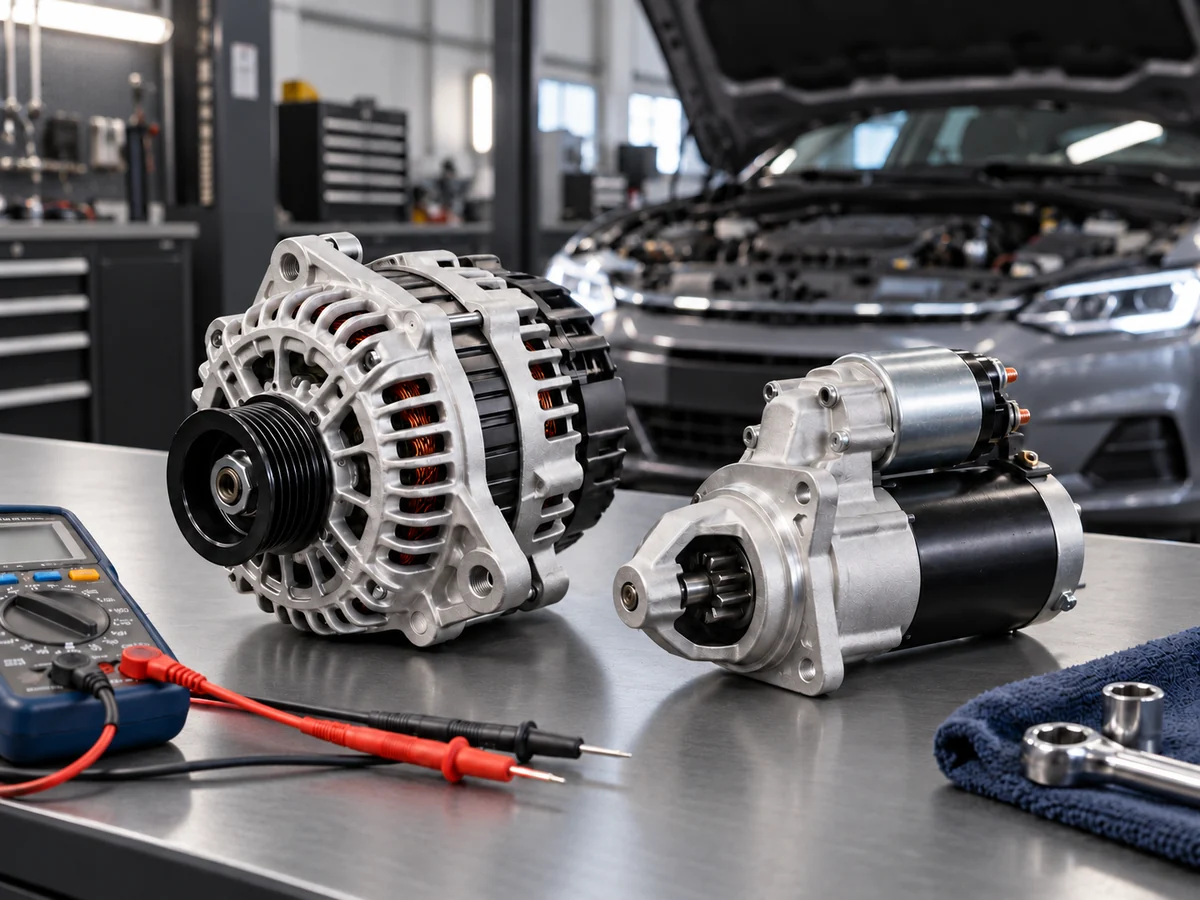
The starter motor cranks the engine; the alternator supplies electrical power and charges the battery while the engine runs. A slow crank, clicking noise or charging warning can point towards these systems, but the same symptoms can come from the battery, wiring, connections or control circuit.
Our approach starts with the relevant electrical and diagnostic checks. Battery condition, supply and earth connections, belt drive and vehicle control information are considered before a replacement is recommended. This helps establish whether the component itself is responsible for the fault.
Replacement parts are matched to the engine and vehicle specification. Smart charging and stop-start systems can have specific requirements, so a similar-looking alternator or starter is not automatically a suitable replacement.
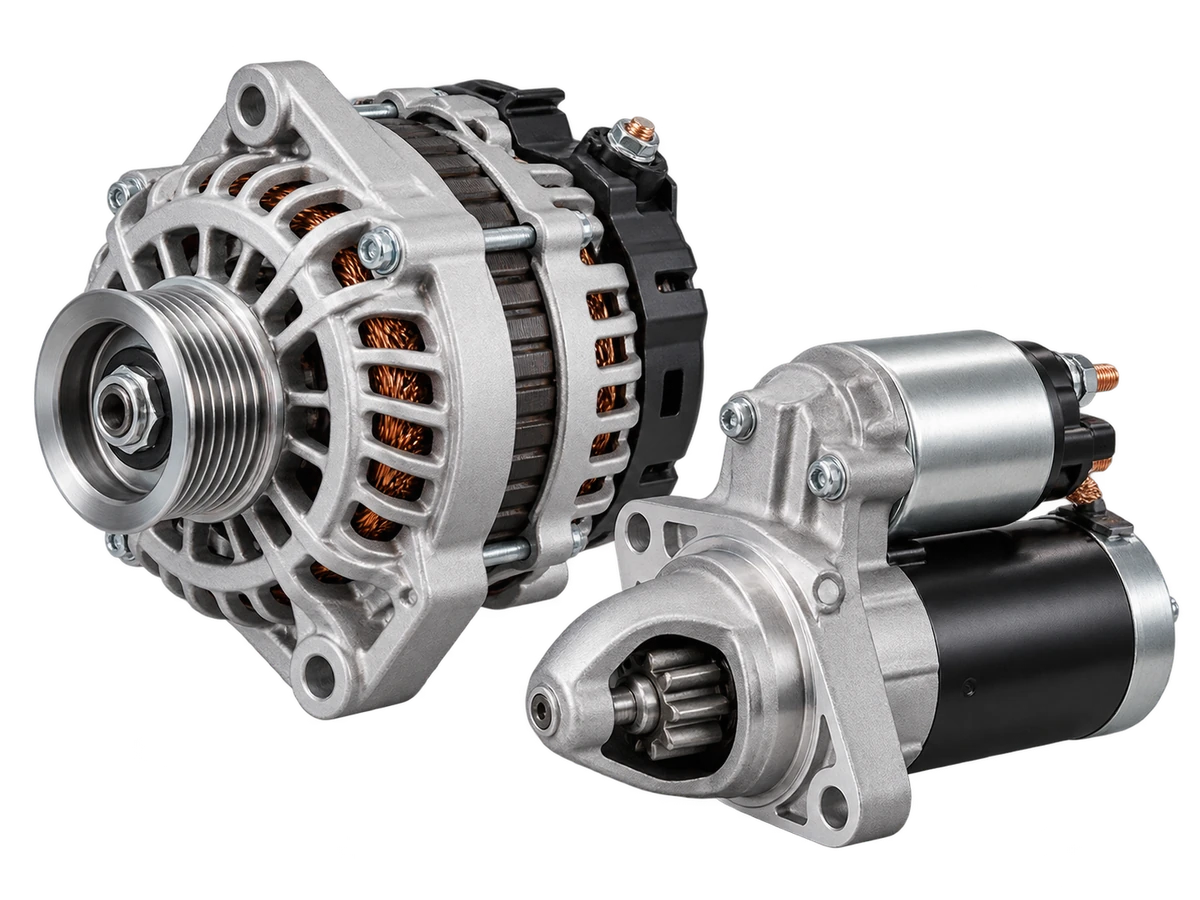
The work is agreed around the symptoms and test results. A component replacement is quoted when it is the appropriate repair.
Assess battery condition and the relevant power, earth and terminal connections. A weak battery or poor connection can affect both starting and charging.
Review charging operation, diagnostic information and the accessible drive-belt system. Check the required output, pulley and control connection when selecting a replacement.
Investigate slow cranking, clicking or no-crank complaints. Supply, control and starting-system checks help distinguish a starter fault from another electrical problem.
Fit the agreed compatible component, then recheck starting or charging operation as appropriate. Any separate faults identified are explained before further work.
An engine that cranks normally but will not start may have a fuel, ignition, immobiliser or other control fault. Describe exactly what happens when you try to start it so the right diagnostic route can be selected.
Searching for alternator repair or starter motor replacement is a useful first step, but similar symptoms can have different causes. The workshop enquiry should describe what happens when starting or driving, so the relevant checks can establish an appropriate repair.
Charging complaints may involve the alternator, its drive, electrical connections or the control circuit. Undercharging and overcharging are different faults. Voltage-drop checks can reveal a supply or earth-path problem that replacing the alternator would leave unresolved. The charging system is assessed before a replacement is selected for the vehicle.
Clicking, slow cranking and no-crank faults can come from several parts of the starting circuit. Testing the supply and earth paths under load can help identify excessive resistance. Tell us whether the engine turns and whether the fault changes when hot or cold, so the starter and its control circuit can be assessed.
Modern vehicles can use charging control and component specifications that differ from older systems. Send the registration and any part number already identified so the replacement can be checked against the application. A connector or mounting pattern that looks similar is not enough to confirm a suitable alternator or starter.
A car that starts after charging the battery but struggles again later may need investigation beyond component replacement. Tell us about recent battery work, added accessories and when the symptom occurs. Where the findings point towards wiring, connections or a drain, the diagnostic and repair scope is discussed separately.
Technical background: DENSO charging-system diagnosis · DENSO starter troubleshooting.
These are useful clues for an enquiry, rather than proof that an alternator or starter must be replaced.
A charging-system warning, repeated flat battery or changing electrical behaviour needs a charging and battery assessment.
The engine turns slowly, clicks when starting or occasionally fails to crank. Battery and circuit checks are part of the diagnosis.
A fault that comes and goes may involve wiring, relays, control signals or connections as well as the starter itself.
Starting or charging trouble that continues after battery replacement needs investigation of the remaining circuits and components.
An alternator replacement cost or starter motor replacement price needs to reflect the actual component, access and checks. If the fault has not yet been confirmed, describe the symptoms when requesting a quote so diagnostic work and replacement labour can be considered clearly.
Engine, charging system and component specification affect the replacement required. A generic price for an alternator or starter may refer to a different part. Share a previous report or part number if available, and ask which replacement option is being quoted before comparing the total with another repair offer.
The time involved depends on where the component is fitted and what needs access to remove it. Mention engine changes, modifications or relevant previous repairs when enquiring. The vehicle details allow the proposed replacement work to be described more accurately than a single price covering every make and model.
A wiring fault, poor connection or belt-drive concern may change the appropriate repair. A component price alone does not cover every possible starting or charging problem. Ask how the initial checks, any proposed additional work and the post-repair assessment are included in the quotation for your vehicle.
Use the same registration and symptoms when comparing UK replacement prices. Check the component specification, labour, applicable VAT and any exclusions. If you already have diagnostic findings, send them rather than assuming every workshop is quoting the same fault or repair. Any separate electrical investigation should be clear before work is authorised.
Send the registration and explain whether the engine cranks, clicks or shows a charging warning.
We discuss diagnostic scope and assess the starting or charging system before recommending parts.
The quotation identifies the compatible component, labour and any associated work required.
Starting or charging operation is rechecked after the agreed replacement.
Tell us whether the engine cranks normally, turns slowly, clicks or makes no starting noise. Include when the problem began, whether it occurs only when hot or cold, and whether the vehicle has recently had battery work. A short description of the sequence is more useful than assuming the starter or alternator must be faulty.
For a charging warning, mention when the lamp appears and any changes in lights, electrical equipment or engine operation. Send the registration and any existing diagnostic report or warning-message photograph. Note accessories or wiring alterations fitted shortly before the problem, so these can be considered in the agreed checks.
If the vehicle cannot be started, discuss its arrival at the Stourbridge workshop before confirming the booking. Customers travelling from Birmingham, Harborne, Edgbaston or further afield in the UK should agree the diagnostic scope and appointment arrangements before organising drop-off.
Replacement cost depends on the component specification, vehicle access and faults found during testing. Send your registration, engine details, symptoms and any recent battery or repair history. If the vehicle will not start, discuss workshop arrival arrangements before booking.
Send your vehicle details →Find us at Unit 3 Glass Court, 70 Hayes Lane, Stourbridge, DY9 8QT. We welcome drivers from Birmingham, Dudley, Halesowen, Brierley Hill, Wolverhampton and surrounding West Midlands areas.
Customers from elsewhere in the UK can book to bring their vehicle to the workshop. Confirm compatibility, the quotation and appointment before travelling.
Workshop hours: Monday–Friday, 9:00am–6:00pm.
Workshop location and contact details →Investigate power supplies, connections and electrical faults.
View service No-start and warning lightsFault-code and live-data assessment for starting and running complaints.
View service Routine workshop careKeep maintenance and vehicle health checks on schedule.
View service Supported module configurationVehicle-specific programming where diagnosis identifies a compatible control-module requirement.
View serviceNo. Battery age, poor connections, short journeys or an electrical drain can also cause a flat battery. Battery and charging checks help identify the cause before deciding whether alternator replacement is needed.
Not necessarily. A low battery, high resistance in a connection or a control fault can produce similar symptoms. Describe the noise and whether the engine turns so the appropriate starting-system checks can be arranged.
Enquire with the registration and engine details. Stop-start and smart charging systems can require a particular alternator, pulley or control connection. Compatibility, parts and any vehicle-specific procedure are checked before the work is agreed.
There is no universal coding requirement. Any configuration or related procedure depends on the vehicle and the repair. Battery registration, where required, applies to a battery replacement and is not automatically part of every alternator job.
A starter replacement may not address that symptom. Fuel, ignition, security and engine-management checks may be needed. Our diagnostic services can help establish the cause before a repair is quoted.
At our Stourbridge workshop, by appointment. We serve Birmingham, Dudley, Halesowen and the wider West Midlands, and welcome UK customers who can bring the vehicle to the workshop. Confirm availability before travelling.
The cost is quoted against the exact vehicle, component specification and proposed work. Send the registration, symptoms and any existing test report. Ask which part, replacement labour and checks are included, with the applicable VAT and exclusions explained. A general UK average does not establish the price for your particular alternator.
The starter specification, vehicle access and the confirmed fault affect the quotation. If the problem has not been diagnosed, describe whether the engine clicks, turns slowly or does not crank. Testing may identify a connection or control issue instead. Compare complete repair scopes rather than a starter’s supply-only price.
No automatic replacement of both components should be assumed. The battery and charging system need their own assessment, particularly after repeated flat-battery events. Tell us the battery’s age and any previous findings. The proposed quotation should identify which components need work and why, rather than treat every charging complaint as the same combined job.
Yes, enquire with the conditions under which the fault appears. Hot or cold operation, time standing, recent repairs and whether the engine actually cranks are useful details. Intermittent symptoms may need additional assessment time or repeat checks. A recording or previous report can help explain the complaint, but it does not confirm the cause on its own.
Send the vehicle details and any findings so the available repair approach can be reviewed. This page covers diagnosis-led alternator and starter motor replacement; internal rebuilding or refurbishment is not automatically included. The quotation will identify the proposed part and work, rather than promise a repair method before the component and fault have been assessed.
Some no-start complaints require checks beyond the starter motor, particularly where there are security warnings or relevant diagnostic findings. Explain the symptoms and send any report before choosing a service. SGTM also provides vehicle-electronics enquiries, with the appropriate programming or immobiliser work assessed separately from a mechanical component replacement.
We will review the details, discuss the service scope and confirm the quotation and workshop availability.